


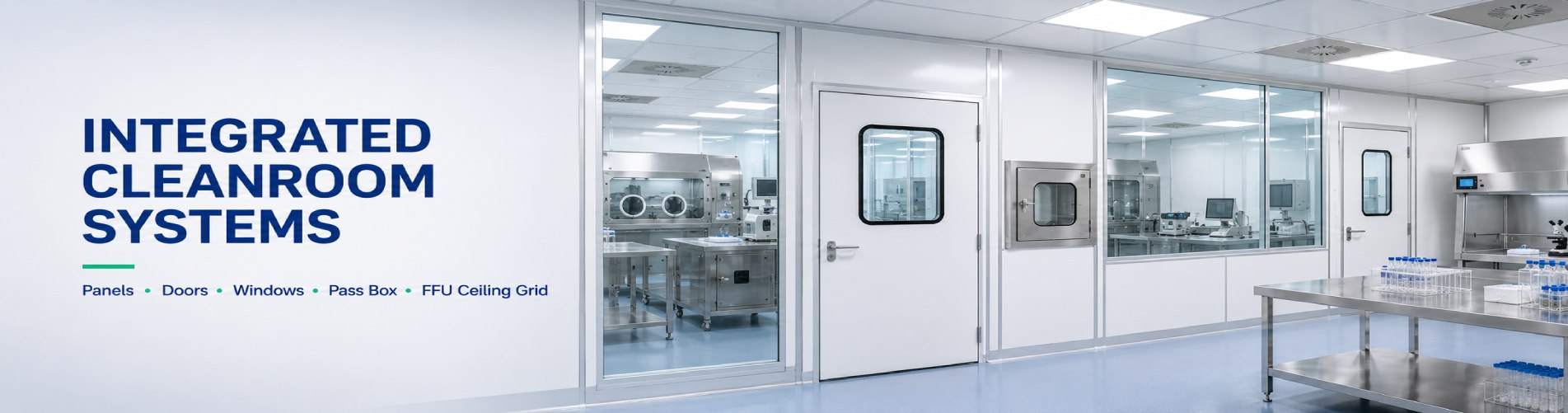




When a leading Chinese Academy of Sciences research campus in Shanghai needed to expand its laboratory capacity, it faced two very different problems at once: how to upgrade demanding research and animal-barrier space inside an operating building, and how to add a fully functional laboratory outdoors, on a wooded plot with no building to put it in. Wonclean supplied both — the cleanroom envelope for the indoor floors, and a self-contained, ark-style modular laboratory for the outdoor site.
This case study walks through the brief, the constraints, and the engineering decisions behind each part of the project, and why a modular approach fit a working scientific campus so well.

Project snapshot
At a glance
01 — The brief
One campus, two very different needs
Research campuses rarely grow in tidy, planned steps. This one needed to solve two requirements in parallel. Inside its South Buildings, several floors had to be converted into controlled research environments — including an upper-floor laboratory-animal facility, which carries some of the strictest contamination-control and finish requirements of any laboratory type. At the same time, the campus needed additional, independent laboratory space quickly, and the only available ground was a tree-shaded plot with no structure on it.
A conventional answer — pour a new building for the outdoor space, and run a long, wet, trade-by-trade renovation indoors — would have meant months of disruption on a live campus where research never stops. The brief, in effect, was: deliver research-grade cleanrooms with as little noise, dust and downtime as possible, and find a way to add a working laboratory outdoors without constructing a building at all.
Modular and prefabricated construction has become the default answer to exactly this kind of problem. Instead of building in place, the cleanroom is manufactured as a set of finished components — or, for the outdoor unit, as a complete room — and then assembled on site in a fraction of the time. For a campus that has to keep its existing laboratories running, that shift from on-site building to on-site assembly is the whole point: the difficult, dusty work moves back into a factory, and only clean, fast installation happens on the live site.
02 — The challenge
Working around a live research campus
Three constraints shaped every decision on this project:
- An operating environment. Adjacent labs stayed in use throughout. That ruled out the dust, wet trades and extended timelines of traditional construction, and pushed the project toward prefabricated components that arrive finished and install cleanly.
- A demanding animal-barrier facility. Laboratory-animal rooms require smooth, fully sealed, easily disinfected surfaces with no dust-collecting corners, tightly controlled airflow and pressure relationships, and fire-rated separation. Every panel, door and window had to support that as a system, not as separate parts.
- An outdoor site with no foundation. The plot for the extra laboratory was wooded and undeveloped, with no building, no slab and limited access between mature trees. Whatever went there had to be structurally self-supporting and serviced independently.

03 — The solution, part one
Indoor: a prefabricated cleanroom & barrier envelope
For the indoor floors of South Buildings 1 and 2, Wonclean supplied the full cleanroom envelope as a coordinated, prefabricated kit of parts rather than a site-mixed assembly. The aim was a continuous, sealed, cleanable interior surface delivered with minimal wet work.
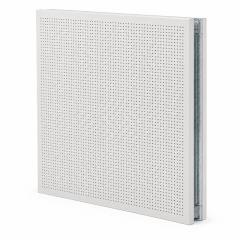
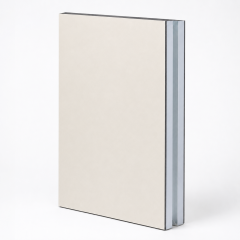
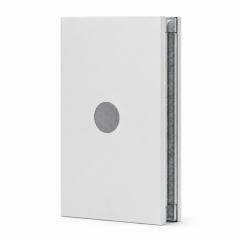
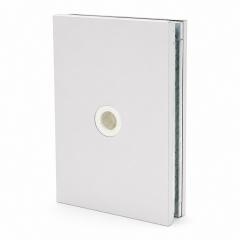
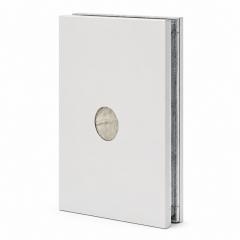
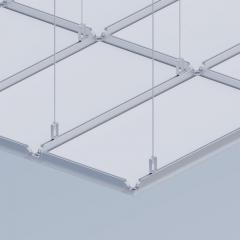
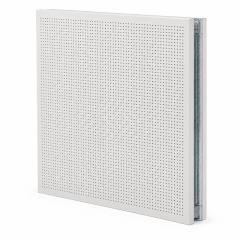
The package centred on factory-finished cleanroom wall panels, which create smooth, non-shedding partitions and ceilings with coved, gap-free junctions — the surface a barrier facility needs to clean and disinfect effectively. Into that envelope went matching cleanroom doors with flush vision windows, so circulation between zones stays sealed and the pressure cascade is preserved.
A laboratory-animal facility raises the bar further. These rooms typically run as a barrier environment, with carefully maintained pressure differentials between animal rooms, corridors and support spaces, and with surfaces that are washed down and disinfected on a routine basis. The envelope therefore has to be impervious and chemical-resistant, with sealed panel joints, coved wall-to-floor and wall-to-ceiling transitions, and openings that close tightly enough to hold a pressure cascade. Panel cores are chosen for the role — for example rock wool or magnesium-oxide cores where fire performance and rigidity matter most — while the visible face stays smooth, bright and easy to wipe down.
Because the facility spans an animal-barrier area, fire safety could not be an afterthought. Wonclean supplied cleanroom fire doors and fire-rated windows that meet the required fire separation while keeping the same flush, cleanable cleanroom finish — no raised frames or ledges to trap contamination. Delivering panels, doors, fire doors and windows from a single source meant the interfaces between them were designed to fit, not negotiated on site.


03 — The solution, part two
Outdoor: an ark-style mobile modular laboratory
The outdoor plot called for something the indoor fit-out could not provide: a complete, free-standing laboratory that did not depend on a host building. Wonclean’s answer was an ark-style, plug-and-play modular laboratory — a highly integrated unit with its own insulated structure and an external HVAC system, which breaks the reliance on traditional indoor building foundations entirely.
Rather than a poured slab, the unit sits on discrete, independent footings — compact concrete pads cast in place between the existing trees. That single decision is what made the wooded plot usable: there was no need to clear the site, level a large foundation or remove mature trees. The laboratory was simply set down where the ground allowed.
Schematic — the ark concept removes the dependency on a permanent building foundation.
Everything that makes the unit a laboratory was built in at the factory: an insulated structural shell, a high-standard clean interior with seamless flooring and flush lighting, and the option to pre-install laboratory equipment before the unit ever left the plant. On site, the work was reduced to placing the footings, setting the unit and connecting services — not building a laboratory from scratch in the open air.
That independence is not only structural. The insulated shell keeps the interior stable against the outdoor climate, while the external HVAC system conditions, filters and pressurises the room from outside the clean envelope, so air handling can be serviced without ever entering the laboratory. Power, water and data arrive as a planned set of connections rather than something improvised on site. Even moving the finished unit into a plot hemmed in by mature trees was a logistics exercise in itself — one that a single, craneable module makes far simpler than assembling a building piece by piece in the same tight space.

04 — What Wonclean supplied
A single-source package
Across the two builds, Wonclean provided a coordinated set of products, all engineered to share interfaces and finish:
- Cleanroom wall & ceiling panels — factory-finished, non-shedding, with coved junctions for the indoor fit-out.
- Cleanroom doors — flush, sealed doors with vision windows to maintain zoning and pressure cascades.
- Cleanroom fire doors & fire windows — fire-rated separation with a clean, flush finish for the barrier areas.
- An ark-style modular laboratory — a complete, insulated, externally serviced unit on independent footings.
Supplying everything from one source removed the usual friction between trades and products: the panels, doors and openings were dimensioned together, so they fit on arrival and kept the same cleanable surface throughout.
05 — The outcome
Results on a live campus
The modular approach delivered exactly what a working research institute needs:
- Minimal disruption. Prefabricated, factory-finished components installed cleanly and quickly, keeping dust, noise and downtime away from neighbouring laboratories that stayed in use.
- A usable wooded site. Independent footings let the outdoor laboratory be placed among mature trees with no full foundation and no need to clear the plot.
- Consistent, cleanable finishes. A single-source envelope — panels, doors, fire doors and windows — gave the barrier facility the continuous, sealed surface it requires.
- Future flexibility. Modular construction means the spaces can be reconfigured, and the outdoor unit relocated, as the campus’s research needs evolve.
Taken together, the two builds show one idea applied at different scales: whether it is a panel-by-panel envelope inside an existing building or a complete room set down outdoors, prefabrication lets a research institute add high-specification space on its own timetable, with disruption measured in days rather than seasons. For a Chinese Academy of Sciences campus running continuous research, that predictability is as valuable as the cleanliness itself.
Planning a research cleanroom or modular laboratory?
Wonclean designs, manufactures and delivers cleanroom envelopes, barrier-facility fit-outs and complete modular laboratories — for research campuses, universities and institutes. Share your site, classification and timeline and our engineers will propose an approach.
FAQ


 線上服務
線上服務

